
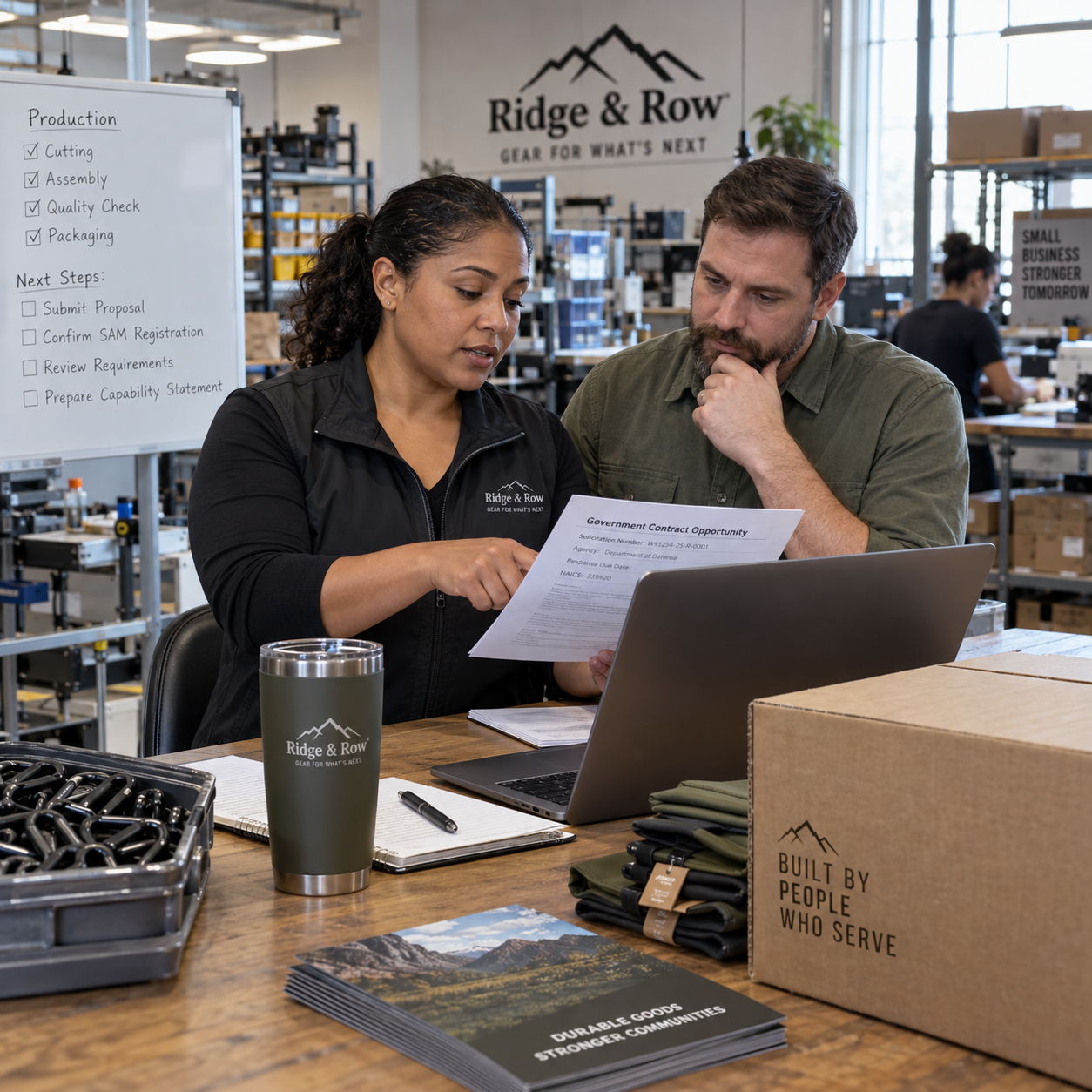
Putting “veteran-owned” on a website and becoming certified for government contracting are not the same thing.
A veteran may legally own a business without holding a federal certification. Certification becomes important when the company wants to compete for contracting opportunities reserved for Veteran-Owned Small Businesses or Service-Disabled Veteran-Owned Small Businesses. The current federal program is administered by the U.S. Small Business Administration through VetCert and MySBA Certifications.
Certification can open a door. It does not deliver a customer, write a proposal, or make the company contract-ready.
Understand the Two Main Categories
A Veteran-Owned Small Business, or VOSB, must generally be at least 51 percent owned and controlled by one or more veterans and qualify as small under the applicable SBA size standard. A Service-Disabled Veteran-Owned Small Business, or SDVOSB, must generally meet those requirements with qualifying ownership and control by one or more service-disabled veterans.
The exact rules include important details about ownership, control, daily management, business structure, and veteran status. Review the current regulations and SBA guidance rather than designing the company around a slogan.
Certification Opportunities Are Not Identical
Certified SDVOSBs can compete for federal set-aside and sole-source opportunities across the federal government when contracting requirements are met. Certified VOSBs receive access to certain opportunities through the Department of Veterans Affairs’ Vets First program. Agencies also track goals for contracting with qualifying small businesses.
Certification does not restrict a business to set-asides. A certified firm can still compete in the open market and pursue ordinary commercial customers.
Ownership and Control Both Matter
A veteran holding 51 percent on paper may not be enough if another person actually controls long-term decisions, daily operations, finances, contracts, or management. SBA examines substance, not merely the ownership percentage printed in formation documents.
Operating agreements, bylaws, voting rights, management roles, outside employment, financing arrangements, and restrictions on the veteran owner’s authority can all matter. Agreements copied from the internet may accidentally give a minority owner powers that create an eligibility problem.
Prepare the Business Before Applying
The company should be properly formed, active, and registered in the federal System for Award Management when required. SAM registration is free. The business should have an accurate Unique Entity ID, appropriate NAICS codes, current formation documents, ownership records, tax information, and licenses relevant to its work.
Use the SBA’s current checklist and MySBA Certifications portal. Do not pay a company simply because it claims certification is impossible without expensive help. SBA does not charge an application fee for its certification programs.
Certification Is Not Contract Readiness
Government customers still need evidence that the company can perform. That includes pricing, past performance, financial capacity, quality controls, cybersecurity or compliance requirements, insurance, staffing, and the ability to respond to a solicitation.
Build a focused capability statement, research agency buying history, identify realistic opportunities, and understand whether the company can deliver at the required scale. A certification attached to an unprepared business is a label, not a strategy.
Watch for Misleading Sales Tactics
SBA warns that official certification communication comes from government channels and that applying to SBA certification programs does not require paying a private registration fee. Be cautious with urgent calls claiming a registration is about to expire, businesses impersonating government offices, and vendors promising guaranteed contracts.
Verify URLs carefully. Official federal sites generally use .gov domains. Never share sensitive business or identity information merely because an email uses government language.
Use Free and Low-Cost Assistance
Veterans Business Outreach Centers, APEX Accelerators, Small Business Development Centers, and SBA district resources can help owners understand preparation, procurement, and certification. Assistance quality varies, but these programs can provide a strong starting point before paying consultants.
Maintain Eligibility After Approval
Certification is not permanent permission to ignore the rules. Ownership, control, size, veteran status, mergers, changes in management, and other material events can affect eligibility and reporting obligations. Keep profiles and registrations current and respond to SBA requests.
Certification Should Serve a Market Plan
Do not reorganize a company around certification before confirming that relevant agencies buy what the company sells. Search actual procurement forecasts, solicitations, contract awards, and agency spending. Talk to buyers and prime contractors. Learn the language of the market.
Veteran-owned certification can create access.
The business still has to create value after the door opens.
Accuracy note: Certification and contracting rules can change. Verify current requirements through SBA and the applicable regulations before applying or restructuring a business.


Leave a Reply