
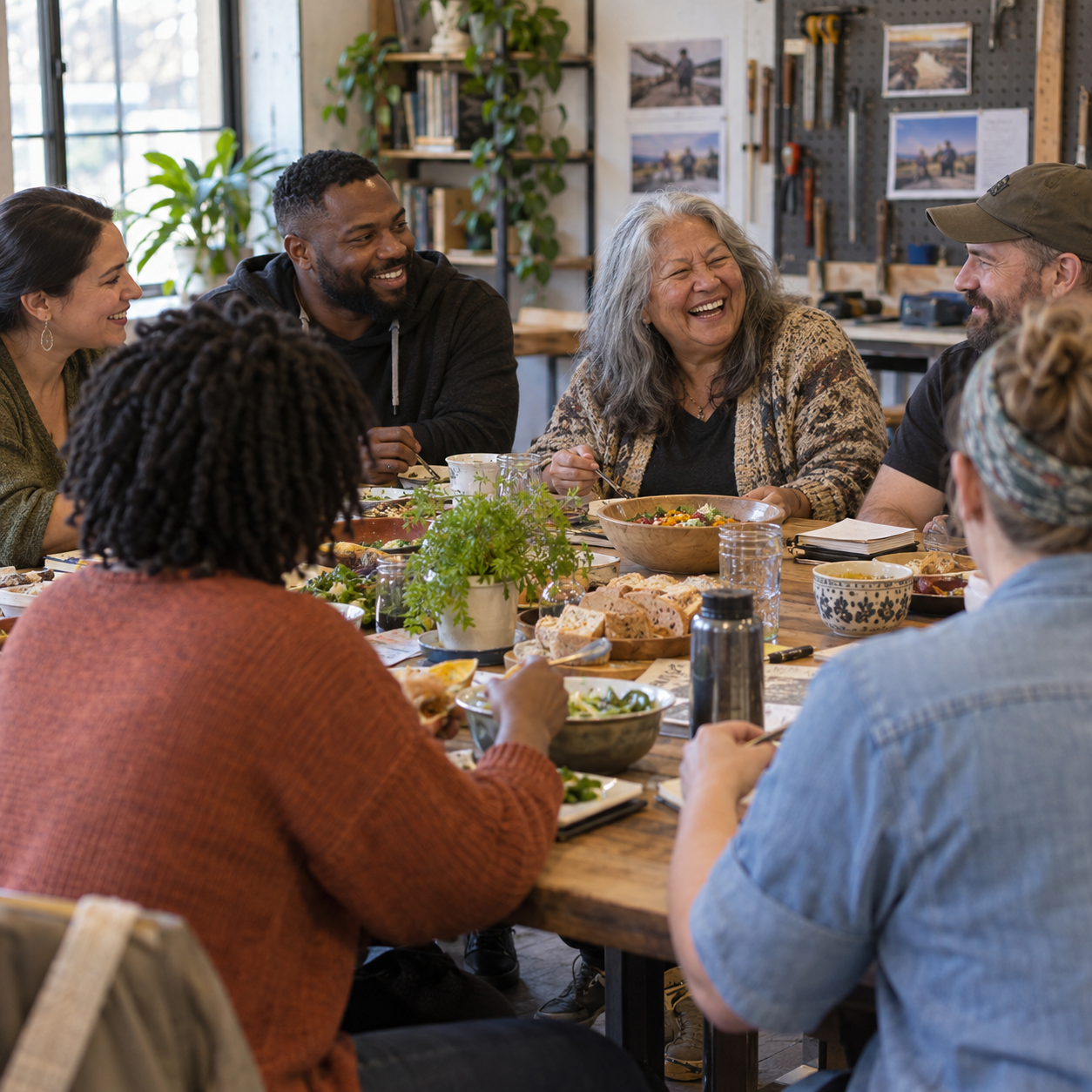
Leaving the military does not only change where you work. It can remove the social structure that quietly held your life together. In uniform, community was built into the day. You saw the same people, worked through the same problems, complained about the same nonsense, and developed trust through repetition. You did not need to schedule friendship three weeks in advance. Your people were simply there.
Civilian life can feel shockingly quiet afterward. Coworkers may be friendly without becoming close. Old military friends scatter across the country. Family members care but do not always understand the version of you that existed during service. The loneliness is not proof that you failed to transition. It is evidence that one community ended before another had time to form.
You do not need to replace your military tribe.
You need to build a life where connection can happen again.
Stop Waiting for Community to Find You
Military community was largely assigned. Civilian community is usually chosen, and that difference can make it feel artificial at first. You may need to attend the same gym, class, volunteer shift, professional meetup, faith community, sports league, or neighborhood event repeatedly before anybody knows your name.
That repetition is not wasted effort. Familiarity is how strangers become acquaintances and acquaintances become friends. The first visit may feel awkward. The fifth begins to feel normal. The twentieth may produce the person you call when life goes sideways.
Build Around What You Are Becoming
Veterans sometimes search only for people who can understand the past. That matters, but community can also be built around the future. If you are learning a trade, starting a business, returning to school, coaching, creating art, training for a race, or becoming a parent, spend time around people doing those things.
You are not betraying military friendships by developing civilian ones. You are allowing your identity to expand.
Shared history creates instant context. Shared direction creates a reason to keep meeting.
Expect Some Relationships to Stay Situational
Not every friendly coworker becomes a close friend, and not every group becomes your new tribe. Civilian community is usually a network of different relationships rather than one unit that meets every social need. A neighbor may be the person who checks on the house. A classmate may understand career frustration. An old military friend may remain the only person who understands a particular memory.
This is not a lesser form of connection. It is a broader one. Let relationships be valuable without forcing each of them to replace everything you lost.
Loneliness Can Distort Interpretation
When you have felt disconnected for a long time, neutral moments can look like rejection. A delayed reply becomes proof nobody cares. One awkward event becomes proof civilian people will never understand you. The conclusion may feel protective, but it also prevents the repetition community requires.
Notice the story before obeying it. Try again with the same group, or try a different setting built around an activity you genuinely value. If isolation is persistent or connected to depression, anxiety, substance use, or thoughts of self-harm, professional support matters. Community and clinical care solve different parts of the problem and can work together.
Keep Veteran Connection Without Living Only in the Past
Veteran organizations, peer groups, service projects, alumni networks, and informal gatherings can provide immediate common ground. The healthiest ones do more than replay old stories. They help people build careers, serve their communities, improve their health, and create new memories together.
Pay attention to how a group makes you feel after you leave. Good community can hold difficult conversations while still pulling people forward. If every gathering leaves you angrier, more isolated, or convinced that civilian life is hopeless, shared experience may have turned into shared stagnation.
Do Something Beside People
Directly asking strangers to become friends feels unnatural. Working beside them does not. Volunteer on a recurring project. Join a recreational team. Help restore a trail. Attend a workshop. Mentor younger veterans. Build something tangible with people.
Side by side activity removes the pressure to manufacture instant intimacy. Conversation develops around the work, trust develops through reliability, and connection grows without demanding that anyone reveal their entire life on day one.
Become the Person Who Initiates
Many adults are lonely, busy, and waiting for somebody else to make the first move. Invite the person from class to coffee. Start the group text. Organize the Saturday hike. Ask a neighbor if they want help with a project. Some invitations will go nowhere. That is normal.
Leadership after service can look as simple as creating the gathering you wish already existed.
Let Relationships Develop at Civilian Speed
Military friendships are often accelerated by shared pressure, long hours, uncomfortable conditions, and mutual dependence. Civilian relationships may develop more slowly because the circumstances are less intense. Slower does not mean shallower. It means trust is being built through ordinary life instead of crisis.
Give people time. Show up consistently. Remember what matters to them. Offer help without keeping score. Accept invitations even when staying home would be easier. Community is not discovered in one dramatic moment. It is accumulated.
Your New Community Can Be Different
Your future circle may include veterans and civilians, older mentors and younger friends, coworkers and neighbors, parents and entrepreneurs, artists and athletes. They may never understand every military reference. They can still understand loyalty, grief, ambition, humor, responsibility, and the desire to build a meaningful life.
The people from your service will always belong to an important chapter. Building new relationships does not erase them. It gives the next chapter somewhere to happen.
The tribe you lost was real.
The community you build next can be real too.


Leave a Reply